
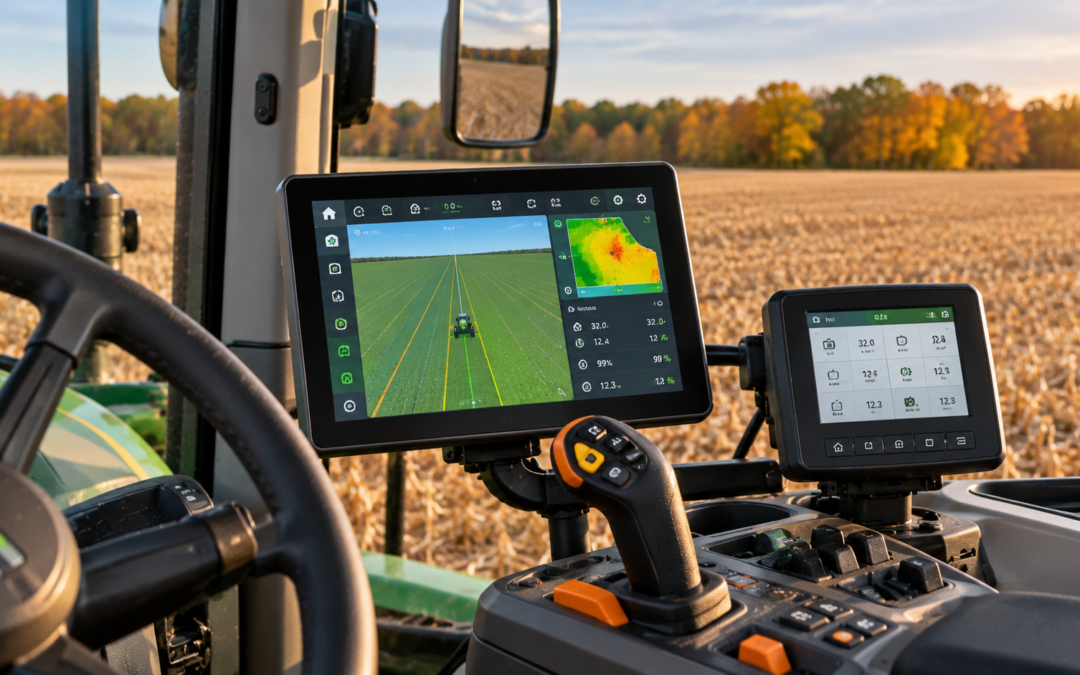
As harvest winds down and another growing season comes to an end, many farmers begin shifting their attention toward equipment maintenance, field performance, and planning for the following year. While fall is traditionally associated with wrapping up fieldwork, it can also be one of the best opportunities to evaluate the technology used throughout the growing season.
Precision agriculture equipment plays an increasingly important role in modern farming. GPS guidance, automatic steering, application rate controllers, monitors, and other systems help farmers manage field operations with greater consistency and control.
However, technology doesn’t remain current forever.
Older displays may lack compatibility with newer equipment, GPS systems may struggle to deliver the accuracy an operation needs, and outdated controllers may limit access to newer application features.
Choosing to upgrade precision ag equipment during the fall provides an opportunity to address these limitations before another busy planting season arrives.
Rather than waiting until equipment is needed in the field, farmers can use the quieter months to evaluate their existing systems, research available options, schedule installations, and become familiar with new technology.
Why Fall Is a Good Time to Evaluate Precision Ag Technology
During planting, spraying, fertilizer application, and harvest, equipment needs to work when it’s needed. There often isn’t much time to stop and investigate whether a different display, controller, or guidance system could improve the operation.
Fall provides an opportunity to review the season while the experience is still fresh.
Think about the equipment used throughout the year.
Did the GPS guidance system maintain the accuracy you expected? Were there communication problems between displays and implements? Did application controllers perform consistently? Were software limitations preventing you from using certain features?
These questions can help identify whether existing equipment still meets the operation’s needs.
Farmers who evaluate their systems during the fall have more time to consider different solutions rather than making rushed purchasing decisions during spring fieldwork.
1. Address Problems Discovered During the Growing Season
Every growing season reveals opportunities for improvement.
Perhaps a display became increasingly difficult to operate, or a guidance system experienced occasional signal problems. Maybe an application controller lacked features needed for a new implement.
These issues may have been manageable during the season, but that doesn’t mean they should be ignored.
Fall is an excellent time to create a list of equipment concerns and determine which problems require maintenance, repairs, or upgrades.
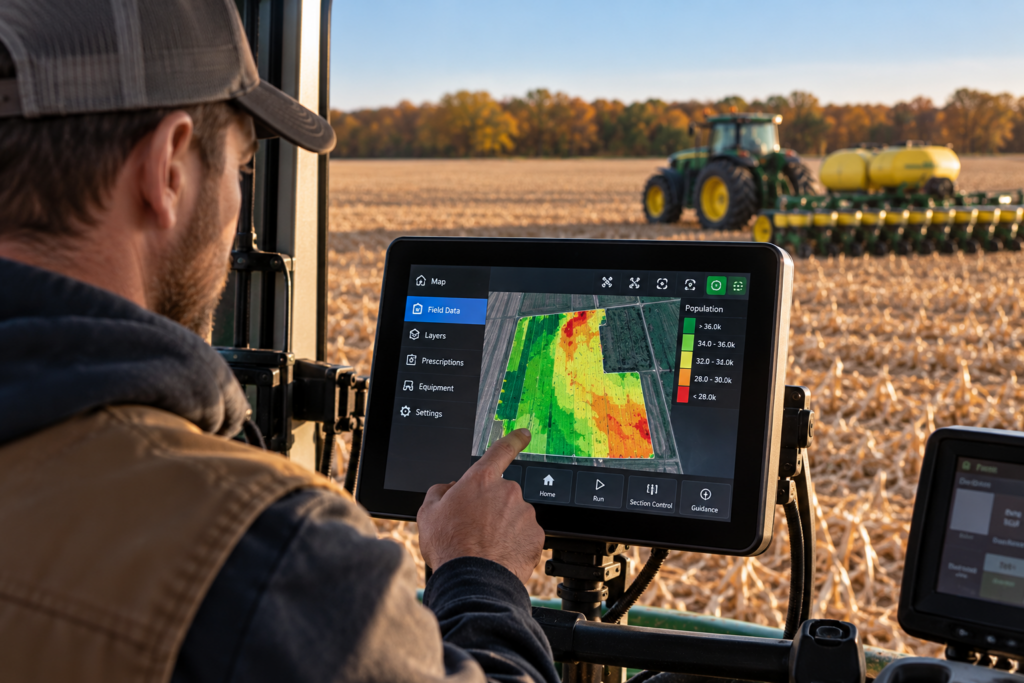
Common signs that technology may need attention include:
- Inconsistent GPS guidance performance
- Frequent display freezing or unexpected restarts
- Difficulty connecting newer implements
- Limited compatibility with application controllers
- Missing or outdated software features
- Poor data transfer between systems
- Damaged wiring or unreliable connections
- Increasing difficulty finding replacement components
Not every problem requires purchasing new equipment. Some issues can be resolved through calibration, software updates, repairs, or improved configuration.
However, when an existing system can no longer support the operation’s requirements, an upgrade may be worth considering.
2. Give Yourself More Time for Installation
One of the biggest advantages of upgrading during the fall is having more flexibility for installation.
Precision agriculture systems often involve more than simply mounting a display inside a tractor.
Depending on the equipment, installation may require GPS receivers, wiring harnesses, steering components, controllers, sensors, and connections to existing implements.
Some systems also require calibration and configuration before they are ready for fieldwork.
Scheduling these tasks during the off season can help reduce the pressure associated with getting equipment ready at the last minute.
When farmers upgrade precision ag equipment before spring, they have more time to identify installation issues, verify compatibility, and make necessary adjustments.
That preparation can help reduce avoidable delays when fieldwork resumes.
3. Improve GPS Guidance Accuracy
GPS guidance is one of the most widely used precision agriculture technologies.
It helps operators maintain consistent passes during planting, tillage, spraying, fertilizer application, and other field operations.
However, not every positioning system provides the same level of accuracy.
Different systems use different correction services and positioning technologies. Depending on the equipment and correction source, available accuracy may range from general pass guidance to the repeatable precision needed for more demanding operations.
Farmers considering an upgrade should evaluate whether their existing GPS system provides the accuracy required for their applications.
For example, an operation using basic guidance for tillage may have different needs than one using automatic steering for planting or controlled traffic applications.
Upgrading a receiver, correction service, or guidance system may improve performance when the current equipment no longer meets those requirements.
Fall provides time to evaluate these options and determine which level of accuracy makes sense for the farm.
4. Take Advantage of Newer Display Technology
Precision agriculture displays have evolved considerably over the years.
Modern displays may offer improved processing performance, clearer interfaces, additional equipment compatibility, and better integration with other farm technologies.
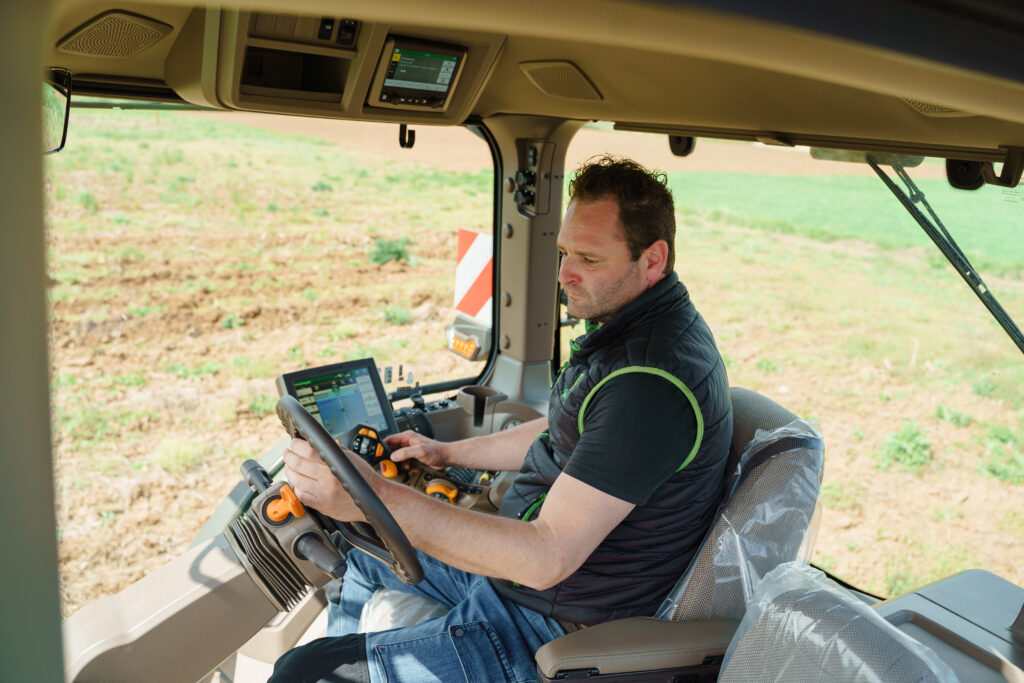
For operators using older monitors, upgrading may simplify daily equipment operation.
Depending on the manufacturer and system, newer displays may support features such as:
- GPS guidance and automatic steering
- Application rate control
- Section control
- Field mapping
- Variable rate prescriptions
- Equipment monitoring
- Data recording and transfer
- Multiple implement configurations
The availability of these features depends on the specific display, software, licenses, and connected equipment.
Farmers should carefully review compatibility before selecting a replacement.
An upgraded display can be valuable, but only when it supports the equipment and functions the operation actually needs.
5. Improve Fertilizer Application Technology
Precision agriculture upgrades aren’t limited to tractors and guidance systems.
Fertilizer application equipment can also benefit from updated technology.
Modern rate controllers, flow meters, valves, and monitoring systems can help operators manage liquid fertilizer applications more consistently.
Depending on the equipment, upgrades may provide improved rate control, section management, and compatibility with variable rate application prescriptions.
For example, a fertilizer applicator equipped with compatible section control technology may reduce unnecessary application in overlapping areas.
Variable rate systems can also adjust application rates based on properly developed prescriptions.
These capabilities can support more precise input management, although the actual benefits depend on field conditions, equipment configuration, calibration, and agronomic recommendations.
For farmers considering fertilizer system improvements, fall offers an opportunity to evaluate existing application equipment and determine whether upgraded controls would be beneficial.
6. Prepare for Variable Rate Applications
Variable rate technology allows application rates to change across different areas of a field.
Depending on the operation, this technology may be used for fertilizer, seeding, or other crop inputs.
However, implementing variable rate applications requires more than purchasing a compatible controller.
Farmers also need appropriate field information, reliable equipment, and a management strategy.
Fall is a useful time to review soil test results, historical yield information, application records, and other field data.
This information may help farmers and agronomists develop management zones or prescriptions for the following season.
If existing equipment cannot support the desired variable rate capabilities, the off season provides time to investigate compatible upgrades.
Planning early also allows operators to become familiar with prescription loading, controller settings, and other system requirements before returning to the field.
7. Review Equipment Compatibility Before Spring
One challenge with precision agriculture is that not every component works with every machine.
A newer tractor may use different communication systems than an older implement. A replacement display might require additional harnesses, modules, software licenses, or other components to communicate properly with existing equipment.
ISOBUS compatibility can help different agricultural machines and implements communicate, but compatibility still depends on the specific equipment and supported functions.
Before upgrading, farmers should identify the tractors, implements, displays, receivers, and controllers currently used across the operation.
It is also important to determine which features need to work together.
A system that performs well on one tractor may require additional components before it can be moved to another machine.
Reviewing compatibility during the fall gives farmers time to identify these requirements and avoid purchasing equipment that doesn’t meet their needs.
8. Make Software Updates and Data Management Easier
Modern precision agriculture involves more than hardware.
Software, firmware, and field data are important parts of equipment performance.
Older systems may have limited storage, outdated software, or restricted data transfer capabilities. These limitations can make it more difficult to organize field information or move data between equipment and farm management platforms.
When evaluating upgrades, farmers should consider how easily information can be transferred, backed up, and reviewed.
Fall is also a good time to export the current season’s field records and create backups before changing displays or other equipment.
Important information may include guidance lines, field boundaries, planting records, application maps, and harvest data.
Before installing replacement equipment, verify that important files are saved in compatible formats and can be transferred to the new system.
Protecting historical information helps farmers maintain continuity between growing seasons.
9. Reduce the Risk of Spring Downtime
Spring fieldwork often depends on a relatively narrow window of suitable weather and field conditions.
When equipment problems occur during that window, delays can become expensive.
A malfunctioning display, damaged wiring harness, or incompatible controller can prevent equipment from operating as intended.
Choosing to upgrade precision ag equipment during the off season provides more time for troubleshooting.
Farmers can schedule installations, inspect connections, update software, and perform system checks before fieldwork begins.
Some equipment can be tested while stationary, while other functions may require a field test under operating conditions.
Completing as much preparation as possible ahead of time can reduce the likelihood of discovering problems during the first day of planting or fertilizer application.
10. Evaluate the Return on Investment
Upgrading technology should be a business decision, not simply a way to have the newest equipment.
Before making a purchase, farmers should evaluate what the upgrade is expected to accomplish.
Potential benefits might include reducing application overlap, improving operational consistency, simplifying equipment operation, or providing capabilities that were previously unavailable.

However, these benefits should be compared with the total cost of the upgrade.
Consider the purchase price, installation, subscriptions, software licenses, training, and future maintenance.
It may also be helpful to estimate how frequently the equipment will be used and whether the expected improvements justify the investment.
For some operations, upgrading a single component may be sufficient.
Others may benefit from a more comprehensive system improvement.
The best choice is the one that meets the operation’s requirements while providing reasonable long term value.
11. Give Operators Time to Learn New Technology
Even the most capable precision agriculture equipment requires proper setup and operation.
New displays, guidance systems, and controllers often introduce different menus, settings, and operating procedures.
Installing equipment during the fall gives operators time to become familiar with these features.
They can learn how to create field profiles, configure implements, adjust guidance settings, load prescriptions, and navigate system menus.
This is particularly important when multiple employees operate the same equipment.
Training before the busy season helps reduce confusion and gives operators an opportunity to ask questions while there is still time to make adjustments.
12. Build a Precision Ag Upgrade Plan
Farmers don’t necessarily need to replace every outdated component at once.
A gradual approach may be more practical.
Start by identifying the most important limitations in the current system.
Then prioritize improvements based on operational needs, equipment compatibility, and available budget.
For example, a farm might begin by upgrading its GPS receiver and display before adding additional application control capabilities later.
Another operation might already have adequate guidance technology but need improved fertilizer rate control.
Developing a plan helps ensure that each purchase supports the farm’s longer term goals.
It can also prevent unnecessary spending on components that may become incompatible with future equipment changes.
What Should Farmers Check Before Upgrading?
Before purchasing new precision agriculture technology, take time to review the existing equipment and identify what the replacement system must accomplish.
Consider the following questions:
- What problems occurred with the current system during the growing season?
- Does the existing equipment still receive software support?
- Are the displays and controllers compatible with current implements?
- Is GPS accuracy sufficient for the operation’s needs?
- Could improved rate or section control benefit fertilizer applications?
- Will additional wiring, modules, or subscriptions be required?
- Can existing field data be transferred to the new system?
- What installation and training support is available?
- Will the upgrade provide enough value to justify its cost?
Answering these questions can help farmers avoid unnecessary purchases and focus on technology that addresses actual operational needs.
Conclusion
Fall provides an excellent opportunity to evaluate the precision agriculture technology used throughout the growing season and determine where improvements may be needed.
With harvest coming to an end and spring fieldwork still months away, farmers have more flexibility to research equipment, review compatibility, schedule installations, and become familiar with new systems.
Whether the goal is improving GPS guidance, modernizing displays, upgrading fertilizer application controls, or preparing for variable rate technology, planning ahead can make the transition smoother.
The decision to upgrade precision ag equipment should ultimately be based on the needs of the operation. Not every system needs replacing, and sometimes a repair, software update, or targeted improvement may be the most practical solution.
However, when existing technology limits productivity, accuracy, or equipment compatibility, fall can be an ideal time to explore available options.
If you’re considering improvements to your GPS guidance, displays, fertilizer application controls, or other precision agriculture systems, contact us here. The team at L&D Ag can help you explore equipment and technology solutions that fit your operation and prepare your machinery for the next growing season.
Further Reading
University of Georgia Extension: 12 Point Checklist to Ensure Your Planter Is Ready for the Field
University of Georgia Extension: Tips for Collecting Quality Planting Data
University of Georgia Extension: Post Harvest Considerations for Yield Monitors and Data Management
