
Summer weather plays a major role in determining crop performance, and few factors influence yield potential more than temperature. While corn thrives in warm conditions, excessive heat can quickly create stress that impacts development, pollination, grain fill, and ultimately harvest results. Understanding how summer heat impacts corn growth can help farmers make informed management decisions throughout the growing season.
Corn is remarkably resilient, but it performs best within specific temperature ranges. When temperatures rise beyond those optimal levels for extended periods, the crop must divert energy toward survival rather than growth. Depending on when heat stress occurs, the effects can range from minor setbacks to significant yield reductions.
Whether you’re evaluating crop performance, monitoring field conditions, or planning future management strategies, understanding how summer heat impacts corn growth is an important part of maximizing productivity.
Understanding Corn’s Ideal Growing Conditions
To understand how summer heat impacts corn growth, it helps to first understand the crop’s preferred growing environment.
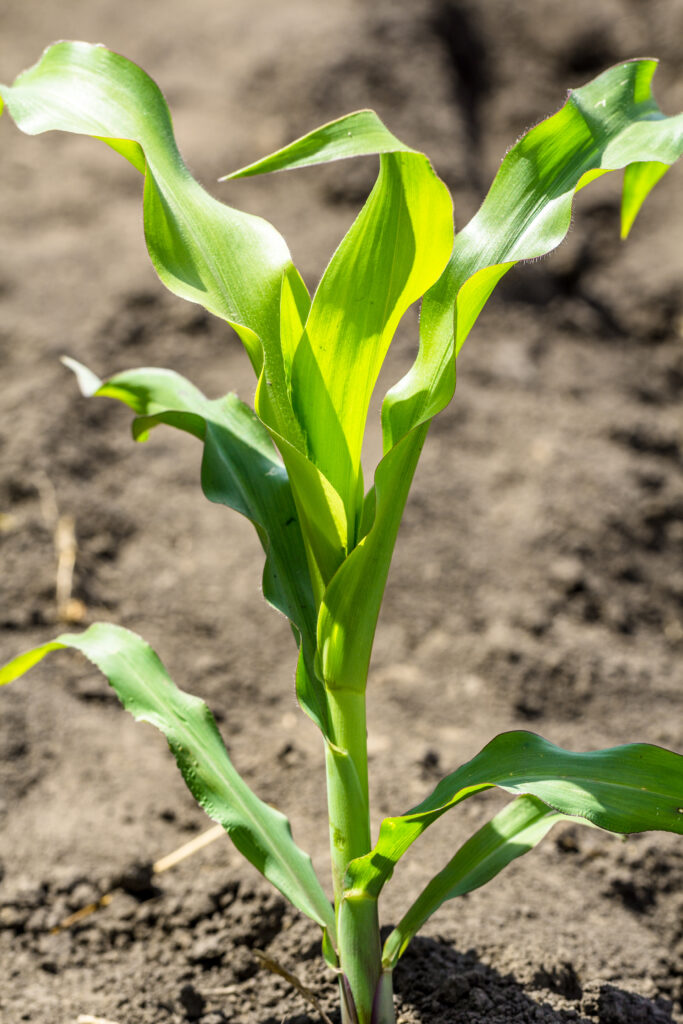
Corn generally performs best when:
- Daytime temperatures range between 77°F and 86°F
- Nighttime temperatures remain moderate
- Soil moisture is adequate
- Plant stress remains minimal
Within these conditions, corn can efficiently:
- Develop roots
- Build leaf area
- Capture sunlight
- Produce carbohydrates
- Support pollination and grain fill
As temperatures climb beyond ideal levels, the plant begins experiencing additional stress that can affect several growth stages.
How Summer Heat Impacts Corn Growth During Vegetative Stages
Early-season heat can affect corn long before pollination begins.
During vegetative growth, corn is focused on:
- Root development
- Leaf production
- Plant height
- Nutrient uptake
When temperatures rise excessively, several challenges emerge.
Increased Water Demand
One of the first ways how summer heat impacts corn growth becomes apparent is through increased water consumption.
Hot conditions cause plants to transpire more rapidly, meaning they lose water through their leaves at a faster rate.
As temperatures rise:
- Soil moisture is depleted more quickly
- Plants require additional water
- Drought stress can develop sooner
If moisture is limited, growth rates often slow significantly.
Reduced Root Development
High temperatures combined with dry soil can restrict root growth.
Shallow or restricted root systems make it harder for plants to access:
- Water
- Nutrients
- Deep soil moisture reserves
Because roots play a critical role throughout the season, early stress can create long-term challenges.
How Summer Heat Impacts Corn Growth During Pollination
Pollination is often considered the most critical stage in corn development.
When discussing how summer heat impacts corn growth, pollination is where the greatest yield losses can occur.
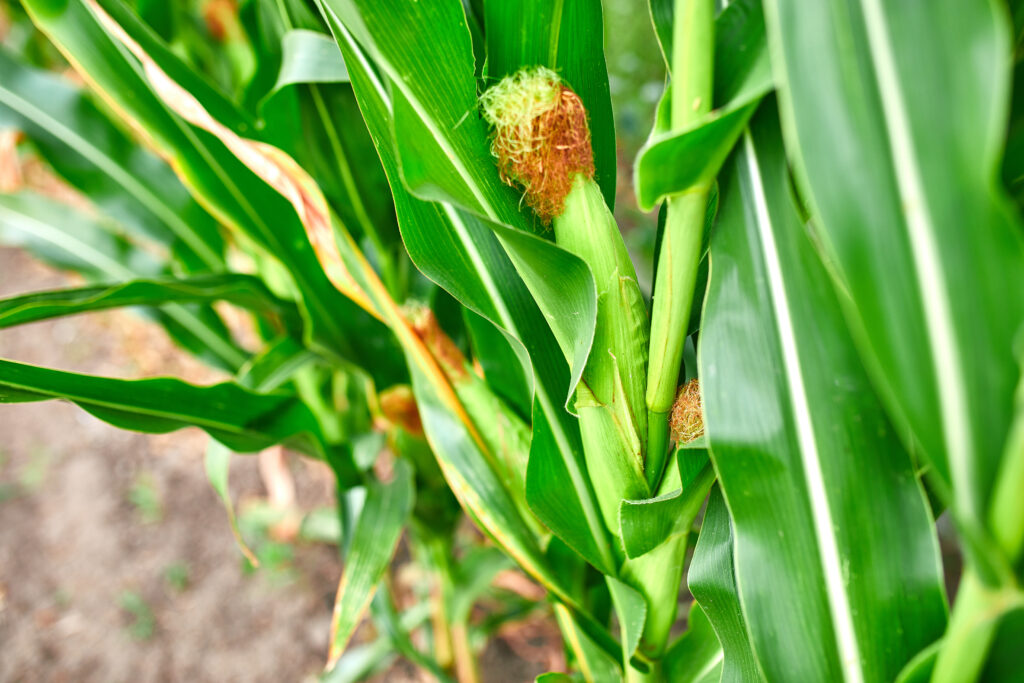
Why Pollination Matters
During pollination:
- Tassels release pollen
- Silks emerge from developing ears
- Fertilization occurs
Successful pollination determines the number of kernels that ultimately develop on each ear.
Heat Stress During Pollination
Extreme heat during pollination can create several problems:
Reduced Pollen Viability
Pollen is highly sensitive to temperature.
Excessive heat can:
- Reduce pollen production
- Shorten pollen lifespan
- Lower fertilization success
Even short periods of extreme heat can impact kernel development.
Silk Emergence Delays
Another example of how summer heat impacts corn growth occurs when silks emerge later than pollen release.
This timing mismatch can reduce pollination success and lower kernel counts.
The result often appears at harvest as:
- Missing kernels
- Uneven ear development
- Reduced yield potential
Heat Stress and Photosynthesis
Photosynthesis drives plant growth by converting sunlight into energy.
One of the lesser-known ways how summer heat impacts corn growth is through reduced photosynthetic efficiency.
When temperatures become excessive:
- Stomata begin closing
- Carbon dioxide intake decreases
- Energy production slows
As a result, plants produce fewer carbohydrates to support:
- Root growth
- Ear development
- Kernel formation
Over time, reduced photosynthesis limits overall crop productivity.
How Summer Heat Impacts Corn Growth During Grain Fill
After pollination, corn enters the grain-fill stage.
This period determines kernel size and weight.
When evaluating how summer heat impacts corn growth, grain fill is another stage where yield losses frequently occur.
Increased Respiration
Plants naturally respire to support growth.
During hot weather:
- Respiration rates increase
- Energy demands rise
- More stored carbohydrates are consumed
Instead of directing energy toward kernel development, plants use additional energy simply maintaining normal functions.
Shortened Grain Fill Period
Heat can accelerate crop development.
While faster development may sound beneficial, it often shortens the grain-fill period.
A shorter grain-fill window can result in:
- Smaller kernels
- Reduced test weight
- Lower overall yield
This is one of the most common ways how summer heat impacts corn growth later in the season.
Signs of Heat Stress in Corn
Recognizing heat stress early allows farmers to monitor fields more effectively.
Common symptoms include:
Leaf Rolling
Leaf rolling is one of the easiest signs to identify.
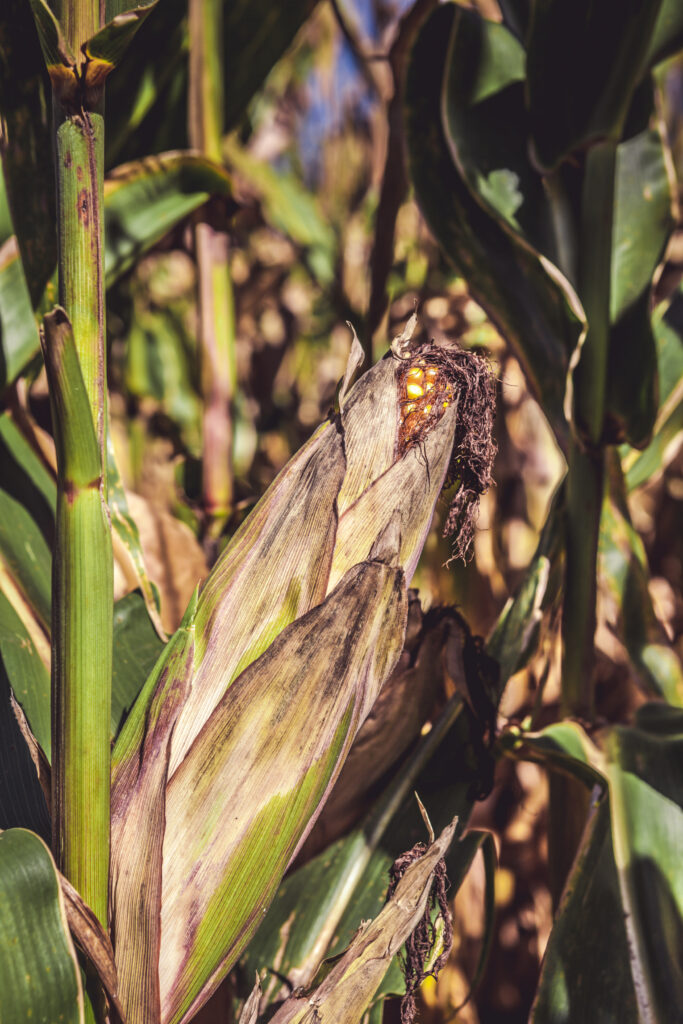
Plants roll leaves to:
- Reduce water loss
- Protect against excessive heat
Persistent leaf rolling often indicates moisture stress.
Gray-Green Coloration
Heat-stressed plants may develop a dull gray-green appearance.
This occurs when water movement becomes limited.
Reduced Growth
When evaluating how summer heat impacts corn growth, slowed development is often noticeable.
Plants may:
- Appear shorter
- Produce fewer leaves
- Show uneven growth patterns
Poor Pollination
Heat stress during pollination can lead to:
- Blank sections on ears
- Missing kernels
- Reduced kernel counts
These symptoms frequently become visible later in the season.
The Relationship Between Heat and Drought
Heat and drought often occur together, creating compounded stress.
While discussing how summer heat impacts corn growth, it’s important to recognize that many problems are amplified when moisture becomes limited.
Combined heat and drought stress can cause:
- Reduced nutrient uptake
- Root damage
- Increased plant stress
- Greater yield reductions
Fields with stronger soil moisture retention often handle heat events more effectively.
Nutrient Uptake Challenges During Hot Weather
Temperature influences nutrient availability and plant uptake.
One of the ways how summer heat impacts corn growth is through reduced nutrient efficiency.
Hot, dry conditions can limit availability of:
- Nitrogen
- Potassium
- Sulfur
- Micronutrients
Plants experiencing nutrient stress often show:
- Yellowing leaves
- Reduced vigor
- Uneven growth
Monitoring crop health throughout the summer becomes especially important during extended heat events.
Using Precision Agriculture to Monitor Heat Stress
Precision agriculture tools can help growers better understand how summer heat impacts corn growth across individual fields.
Technology allows farmers to monitor:
- Variable field conditions
- Crop health
- Moisture stress
- Yield potential
Tools such as:
- Satellite imagery
- GPS mapping
- Variable rate technology
- Yield monitoring
can help identify problem areas before significant damage occurs.
This data allows growers to make more informed management decisions throughout the season.
Management Strategies for Hot Summers
While farmers cannot control the weather, they can implement practices that reduce the effects of heat stress.
Improve Soil Health
Healthy soils help retain moisture and support stronger root systems.
Benefits include:
- Improved water infiltration
- Better moisture retention
- Enhanced nutrient availability
Reduce Compaction
Compacted soils limit root growth.
Deeper roots allow plants to access moisture during periods of heat stress.
Maintain Proper Planting Practices
Many management decisions that influence how summer heat impacts corn growth actually occur months earlier.
Proper:
- seed placement
- population management
- planter setup
- emergence consistency
all contribute to stronger plants that can better tolerate stress later.
Monitor Fields Regularly
Frequent scouting helps identify:
- Heat stress symptoms
- Nutrient deficiencies
- Moisture concerns
Early identification often improves management opportunities.
Long-Term Effects of Heat Stress
Not all heat stress results in catastrophic yield loss.
However, repeated exposure to excessive temperatures can create cumulative effects.
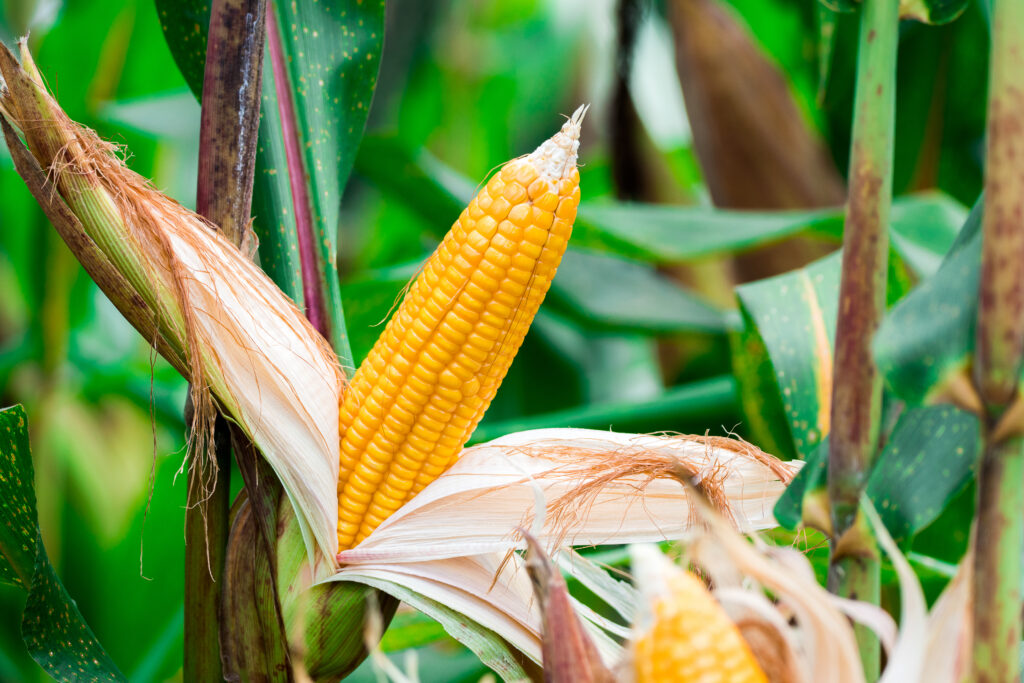
These include:
- Reduced kernel counts
- Smaller kernels
- Lower test weights
- Reduced stand uniformity
The severity depends largely on:
- timing
- duration
- moisture availability
Understanding how summer heat impacts corn growth allows farmers to better interpret field performance and make adjustments for future seasons.
Final Thoughts
Understanding how summer heat impacts corn growth is essential for evaluating crop performance throughout the growing season. While corn thrives in warm weather, excessive heat can create challenges during vegetative growth, pollination, and grain fill. These effects often become visible through reduced kernel counts, slower growth, moisture stress, and lower yield potential.
Although weather cannot be controlled, proper planting practices, soil management, precision agriculture tools, and regular field monitoring can help reduce the impact of stressful summer conditions.
If you’re looking for ways to improve planting performance, utilize precision ag technology, or maximize efficiency throughout the growing season, contact us here and our team can help you find solutions that support long-term success in the field.
Further Reading
- University of Minnesota Extension – Corn Growth and Development
https://extension.umn.edu/corn-growth-and-development - Iowa State University Extension – Corn Response to Heat Stress
https://crops.extension.iastate.edu - Purdue University Agronomy – Corn Pollination and Stress Factors
https://www.agry.purdue.edu - USDA Climate Hubs – Agriculture and Heat Stress Resources
https://www.climatehubs.usda.gov
