
Introduction: Embracing Drone Technology in Agriculture
The agricultural industry is undergoing a major transformation, fueled by advancements in technology. Among the most exciting innovations is drone technology in agriculture, which is rapidly changing how farmers monitor, manage, and protect their crops. From crop scouting and spraying to pest detection, drones offer farmers unprecedented precision, efficiency, and insight.
Farmers in regions like Hartland, MN, and across the Midwest are embracing this cutting-edge technology to improve yields, reduce costs, and sustainably manage their land. In this blog, we’ll explore what drone technology in agriculture entails, how it benefits modern farming, and why it is essential for future success.

Understanding Drone Technology in Agriculture
Drone technology in agriculture involves using unmanned aerial vehicles (UAVs) equipped with specialized sensors, cameras, and sometimes spraying systems to collect vital data about crops and fields. Unlike traditional ground scouting or satellite imaging, drones provide high-resolution, real-time data at a relatively low cost.
These drones can be equipped with multispectral cameras to analyze plant health via vegetation indices like NDVI (Normalized Difference Vegetation Index), thermal sensors to detect temperature anomalies, or RGB cameras for detailed imagery. This data enables farmers to make informed decisions on irrigation, fertilization, pest control, and harvesting.
How Drone Technology Improves Crop Scouting
Crop scouting is one of the most labor-intensive tasks on a farm. Traditionally, it involves walking or driving through fields to look for signs of stress, pests, or disease. With drone technology in agriculture, this process becomes faster, more thorough, and more data-driven.
Using drones, farmers can cover hundreds of acres in a fraction of the time it takes to scout manually. The high-resolution imagery and multispectral data captured by drones allow early detection of nutrient deficiencies, water stress, weed infestations, and disease outbreaks before they become visible to the naked eye.
For example, a farmer in Southern Minnesota using drone-based NDVI mapping can identify parts of a cornfield that are nitrogen deficient, enabling precise side-dress fertilizer applications that save money and protect the environment.
The Rise of Drone Spraying: Precision in Every Drop
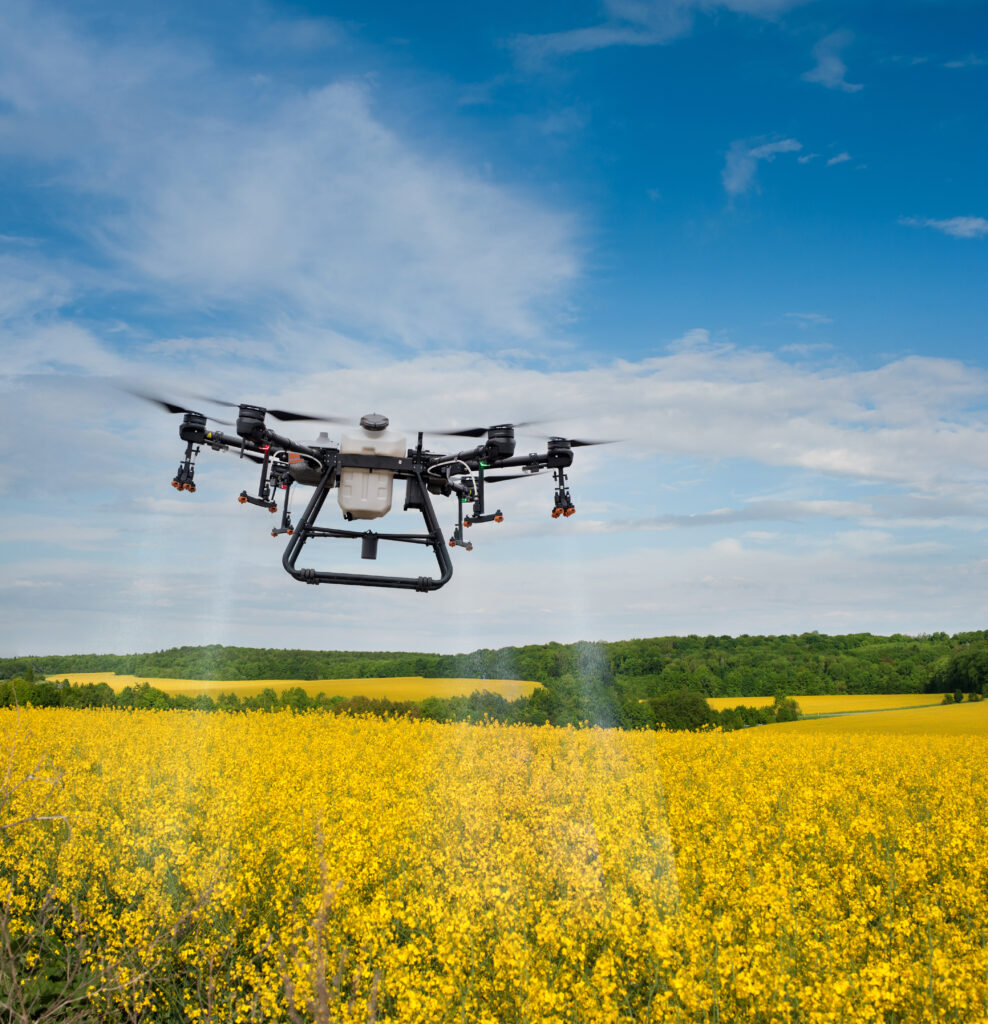
While crop scouting is a crucial application, drone technology in agriculture also extends to spraying fertilizers, herbicides, and pesticides. Traditional ground-based spraying equipment is often limited by terrain and accessibility, and it can cause soil compaction that damages soil health.
Drones equipped with spraying systems offer several advantages:
- Precision Application: Targeted spraying reduces chemical use by applying inputs exactly where they’re needed.
- Access to Difficult Terrain: Drones can easily spray uneven, muddy, or steep fields inaccessible to tractors.
- Reduced Soil Compaction: Since drones fly, they don’t compact soil, preserving its structure.
- Time Savings: Drones can cover significant acreage quickly, allowing timely applications.
As the technology matures, drones are becoming a cost-effective alternative or complement to traditional sprayers, especially for specialty crops like orchards or vineyards, where precise application is critical.
Pest Detection with Drone Technology in Agriculture
Pest outbreaks are a constant threat to crop yields. Timely identification and treatment are essential to prevent significant losses. Drone technology in agriculture offers an advanced solution through multispectral and thermal imaging to detect pest damage early.
Drones can capture stress signals in plants caused by insects or diseases before symptoms become visible. Combined with artificial intelligence and machine learning software, drones can even identify specific pest species or disease patterns.
For example, in soybean fields near Hartland, MN, drones can help detect early infestations of spider mites, allowing farmers to act quickly with targeted pest control measures, reducing crop damage and pesticide use.
Choosing the Right Drone for Your Farm
Not all drones are created equal. Selecting the appropriate drone depends on the size of your operation, crop types, and specific needs such as scouting, spraying, or pest detection.
There are three primary types of drones used in drone technology in agriculture:
- Fixed-wing drones: These are designed for large-scale scouting and mapping due to their longer flight time and greater range.
- Multirotor drones: More maneuverable and suitable for detailed inspections and spraying smaller areas.
- Hybrid VTOL drones: These combine the advantages of fixed-wing and multirotor, ideal for farms needing versatility.
Popular brands such as DJI Agras, SenseFly, and Parrot offer drones tailored for agricultural purposes, with integrated software for data analysis. It’s crucial to also consider FAA regulations and certification requirements when choosing a drone for commercial farm use.
Implementing Drone Technology in Agriculture on Your Farm
Adopting drone technology in agriculture requires more than just buying equipment. Successful implementation involves training, regulatory compliance, and integration with farm management practices.
Farmers should start by defining goals — whether it’s improving scouting efficiency, precise spraying, or pest monitoring. Obtaining an FAA Part 107 license is mandatory for commercial drone operations in the U.S., and specialized certifications may be needed for spraying drones.
Using dedicated agricultural drone software platforms like DroneDeploy, Pix4D, or Agremo helps process drone data into actionable insights. Partnering with local agronomists or ag tech dealers can streamline this process, ensuring drones complement existing workflows.
Return on Investment (ROI) of Drone Technology in Agriculture
Investing in drone technology in agriculture can offer significant returns, though the initial costs vary. Equipment prices range from $1,000 for basic scouting drones to over $20,000 for advanced spraying models.
Software subscriptions and training costs also contribute, but the efficiency gains, input savings, and yield improvements often justify the investment.
Studies show that drone scouting can reduce field inspection times by up to 90%, while precision spraying minimizes chemical use and labor. Early pest detection prevents yield losses, translating directly to increased profits.
The Future of Drone Technology in Agriculture
The future of farming will see deeper integration of drone technology in agriculture with other digital tools such as soil sensors, weather stations, and autonomous tractors. The convergence of these technologies will enable fully automated, data-driven farm management.
Artificial intelligence will enhance drones’ abilities to detect and respond to crop needs in real time, enabling autonomous scouting and spraying missions that optimize input use and maximize productivity sustainably.
Ready to Elevate Your Farming Operation?
Don’t get left behind—take advantage of the latest drone technology in agriculture today! Contact L&D Ag to learn how our expert team can help you integrate precision scouting, spraying, and pest detection drones into your farm management.
Let L&D Ag be your partner in bringing innovation and efficiency to your fields!
Sources
FAA Drone Regulations for Agriculture: https://www.faa.gov/uas/commercial_operators
DroneDeploy Agriculture Solutions: https://www.dronedeploy.com/industries/agriculture/
University of Minnesota Extension – Precision Agriculture: https://extension.umn.edu/precision-agriculture
PrecisionHawk Agriculture Drones: https://www.precisionhawk.com/solutions/agriculture
